Just a moment,
we are processing your request ...

The Comprehensive Garage Door Tune-Up: Protecting Your Investment

What type of service do you need help with?

This field is required

Wide Network Reach

We instantly broadcast your request to multiple local providers to increase response chances.

Comprehensive Solutions

From simple tune-ups to complete door replacements, our network handles it all.

Independent Specialists

Connect with established independent contractors who focus on garage systems.

You change the oil in your car and service your HVAC system, but your garage door—the largest and heaviest moving object in your home—is often neglected until it breaks. A professional annual tune-up is the most cost-effective way to extend the life of your door system, ensure family safety, and prevent expensive emergency repairs down the road.

1. Warning Signs: Is Your Door Crying for Help?

Before we dive into the solution, it is important to recognize the symptoms of a sick garage door. Your door often gives you auditory and visual clues weeks or months before a catastrophic failure.

  • The “Grinding” Noise: Metal-on-metal sounds often indicate worn-out rollers or a track that is out of alignment.
  • The “Squealing” Noise: This high-pitched sound usually points to a lack of lubrication on the hinges or springs.
  • Jerky Movements: If your door shudders or moves unevenly, it may have a frayed cable or a binding roller.
  • The “Heavy” Door: If you disconnect your opener and cannot easily lift the door with one hand, your springs are likely fatigued or broken.

2. What Does a Professional Tune-Up Include?

A real tune-up goes far beyond just a quick visual check. It is a rigorous, multi-point inspection and adjustment process designed to reset your door to factory specifications.

The “Hardware Review”

Over time, the vibration of the door opening and closing loosens the nuts and bolts that hold the system together. Technicians will tighten every hinge, roller bracket, and track bolt to ensure the door is structurally sound. A single loose hinge can cause a panel to buckle, turning a $15 repair into a $500 panel replacement.

Spring Tension Balancing

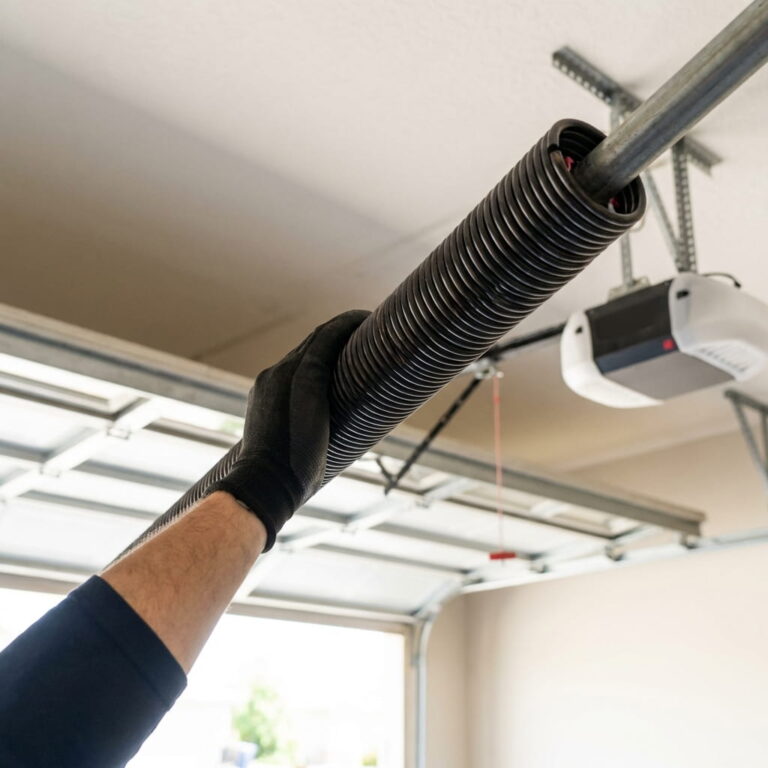
Springs naturally lose a small amount of tension (fatigue) over time. A pro will test the door’s balance and add precise “quarter turns” to the springs to restore the door to a “weightless” state. This is critical because an unbalanced door forces your opener to work harder, leading to premature motor burnout.

Safety Sensor Alignment

Misaligned sensors are a common headache that prevents your door from closing. The technician will clean the photo-eye lenses, align them perfectly, and test the auto-reverse safety feature to ensure the door reverses immediately if it hits an obstruction.

Travel Limit Adjustment

If your door slams into the concrete or stops six inches short, the travel limits are off. Adjusting these ensures a tight seal against the weather without crushing the bottom gasket.

3. The Science of Lubrication

Proper lubrication is the difference between a noisy, grinding door and a whisper-quiet one. However, using the wrong product can do more harm than good.

  • The “WD-40” Mistake: Many homeowners make the mistake of spraying standard WD-40 on their tracks. WD-40 is a solvent/cleaner, not a long-term lubricant. It actually strips away existing grease and attracts dust and dirt, which turns into a gritty paste that wears out rollers.
  • The Professional Solution: Technicians use specialized Lithium-based or Silicone-based sprays. These lubricants coat the steel rollers, hinges, and bearings without attracting dust. They penetrate deep into the moving parts to reduce friction, prevent rust, and silence squeaks.
  • What NOT to Lubricate: Never grease the tracks themselves. The rollers are designed to roll inside the track, not slide. Grease in the tracks will only collect hair and debris, causing the rollers to skid.

4. DIY Maintenance vs. Professional Repair: Drawing the Line

Homeowners often ask, “What can I do myself?” There is a clear line between safe maintenance and dangerous repairs.

The “Safe” DIY Checklist (Monthly)

  • Visual Inspection: Look for rust on springs or fraying on cables.
  • The Photo-Eye Test: Wave a broom in front of the sensors while the door is closing to ensure it reverses.
  • The “Balance Test”: Disconnect the opener (pull the red cord) and lift the door halfway. If it stays put, it is balanced. If it slams down, call a pro immediately.

The “Danger Zone” (Call a Pro)

Never attempt to adjust or repair the following components yourself:

  • Torsion Springs: These are under immense tension and can cause severe injury or death if they snap or uncoil unexpectedly.
  • Bottom Brackets & Cables: The bottom brackets are connected to the high-tension cables. Loosening these can cause the cable to whip with dangerous force.
  • Off-Track Doors: Forcing a door back into the track can cause it to fall completely out of the opening.

5. Why Routine Maintenance Saves You Money

Think of a tune-up as an early warning system for your wallet.

  • Catching Small Problems Early: A technician can spot a fraying cable or a cracking hinge long before it snaps. Replacing a component proactively is always cheaper than an emergency service call after hours.
  • Extending Opener Life: A well-balanced and lubricated door is easy to lift. This means your garage door opener doesn’t have to work as hard, preventing gear stripping and protecting the motor’s lifespan.

Frequently Asked Questions (FAQ)

Q: How often should I have my garage door tuned up? A: Industry standards recommend a professional inspection and tune-up once a year. If your garage is used as the main “front door” for your family (cycling multiple times a day), consider every 6 months.
Q: Can I just use grease from my auto garage? A: Heavy automotive grease is generally too thick for garage doors. It tends to harden in cold weather and collect too much grit. Stick to a sprayable white lithium or silicone lubricant designed for garage doors.
Q: How long does a tune-up take? A: A comprehensive professional tune-up typically takes 45 to 60 minutes. This allows time for the 20+ point inspection, lubrication, and any necessary minor adjustments.
Technician Near You

DANGER

Do not attempt to lift a door with a broken spring.
Call a pro.

Related Posts

Secure Your Free Estimate & Book Expert Garage Repairs Now

Secure Your Free Estimate & Book Expert Garage Repairs Now

Connect with highly-rated local professionals for rapid service that ensures your system's longevity. Receive complimentary price quotes from trusted garage door providers in your neighborhood. Connect with highly-rated local professionals for rapid service that ensures your system's longevity. Receive complimentary price quotes from trusted garage door providers in your neighborhood.