Replacing your garage door is one of the highest ROI (Return on Investment) home improvement projects you can undertake. According to Remodeling Magazine’s Cost vs. Value Report, a new garage door often recoups 90-100% of its cost in added home value.
However, a flawless installation requires more than just picking a color. It requires precise engineering and professional execution. Here is exactly what to expect from the initial measurement to the final safety check.
A successful installation begins long before the truck arrives. Because every garage opening is slightly unique due to settling foundations or custom framing, “off-the-rack” doors rarely fit perfectly without professional verification.
A little preparation goes a long way toward ensuring a smooth installation. On the morning of the install, follow these steps:
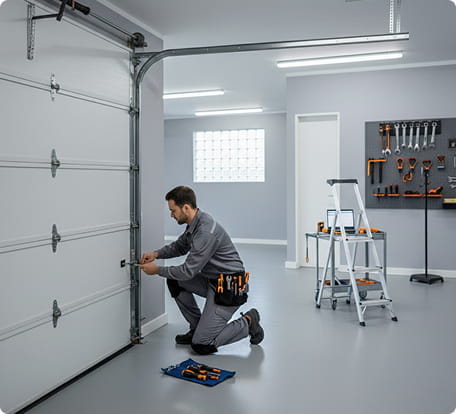
A standard installation typically takes 4–6 hours for a single door. Here is the step-by-step workflow:
We don’t just “tear it down.” We carefully disassemble the old system.
We inspect the wood “jambs” (the frame) for rot or cracks. If the frame is solid, we install the new vertical tracks, ensuring they are perfectly plumb (vertical) and level. If the tracks are even slightly off, the door will bind or squeak.
We stack the new door sections one by one, installing the rollers and hinges as we go. This is also when we insert the bottom weather seal, which prevents rain and leaves from blowing under the door.
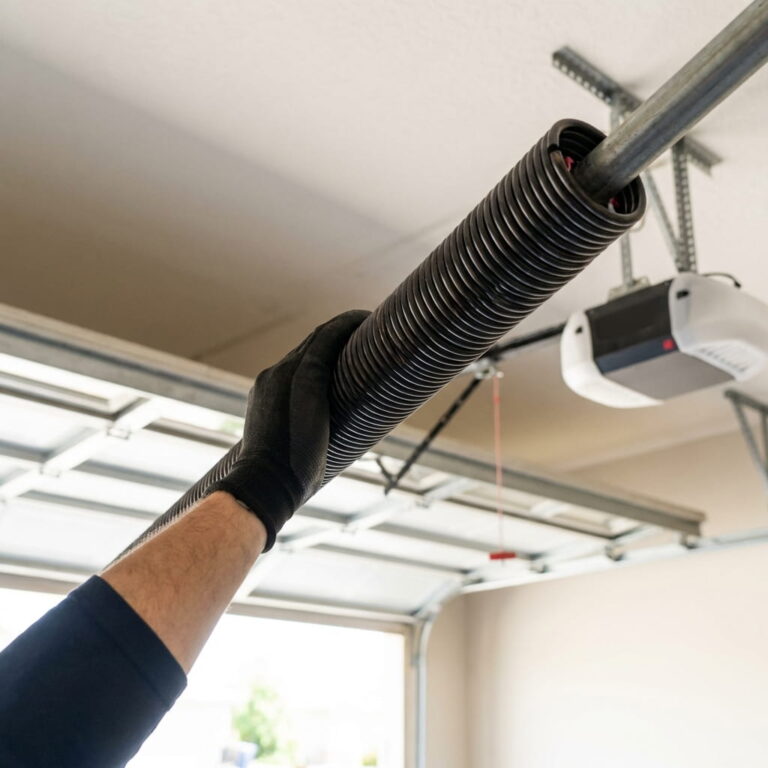
Once the door is stacked, we install the Torsion Spring bar above the header. We wind the spring to a precise calculation based on the door’s weight (e.g., 32 quarter-turns for a 7-foot door). A perfectly balanced door should stay halfway open without falling or shooting up.
We don’t leave until you are comfortable with the new system.
Q: Do I need to repaint the new door? A: Most steel garage doors come with a baked-on primer and topcoat that is maintenance-free. However, if you want a custom color, you can paint them using high-quality exterior latex paint.
Q: Can I reuse my old garage door opener? A: Usually, yes. As long as your opener is in good working condition and meets current safety standards (has safety eyes), we can reconnect it to the new door.
Q: Why is my new door so much quieter? A: New doors often use nylon rollers (instead of steel) and have tighter track tolerances, which significantly reduces the rattling noise associated with older doors.

Connect with highly-rated local professionals for rapid service that ensures your system's longevity. Receive complimentary price quotes from trusted garage door providers in your neighborhood. Connect with highly-rated local professionals for rapid service that ensures your system's longevity. Receive complimentary price quotes from trusted garage door providers in your neighborhood.

