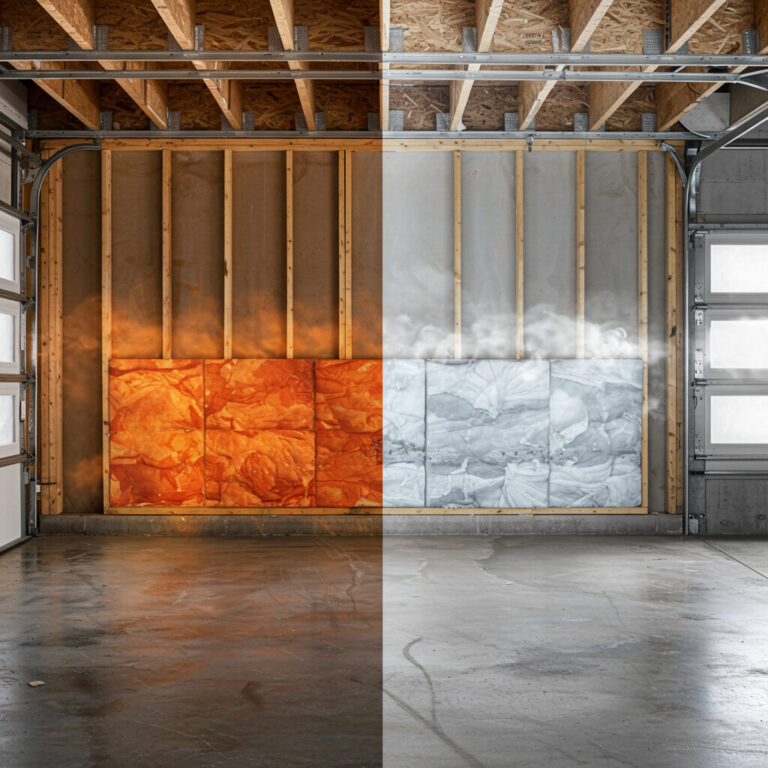
If you live in states like Arizona, Texas, or Florida, you know the feeling: you open the door to your garage, and it feels like you’ve just opened an oven door to check on a roast. In the peak of summer, garage interiors can easily soar to 140°F—often 20 to 30 degrees hotter than the outside air.
This phenomenon, known as the “Oven Effect,” does more than just make you sweat while you’re loading groceries. It silently cooks your car battery (shortening its lifespan), ruins paints and chemicals stored on shelves, and forces your spare fridge or freezer to work overtime. Worse yet, that massive pocket of trapped heat radiates through shared walls, forcing your home’s air conditioner to fight a losing battle against your own garage.
Fortunately, you don’t need to install an expensive mini-split AC system to make a difference. Here is how to break the heat cycle using three proven, energy-efficient strategies.
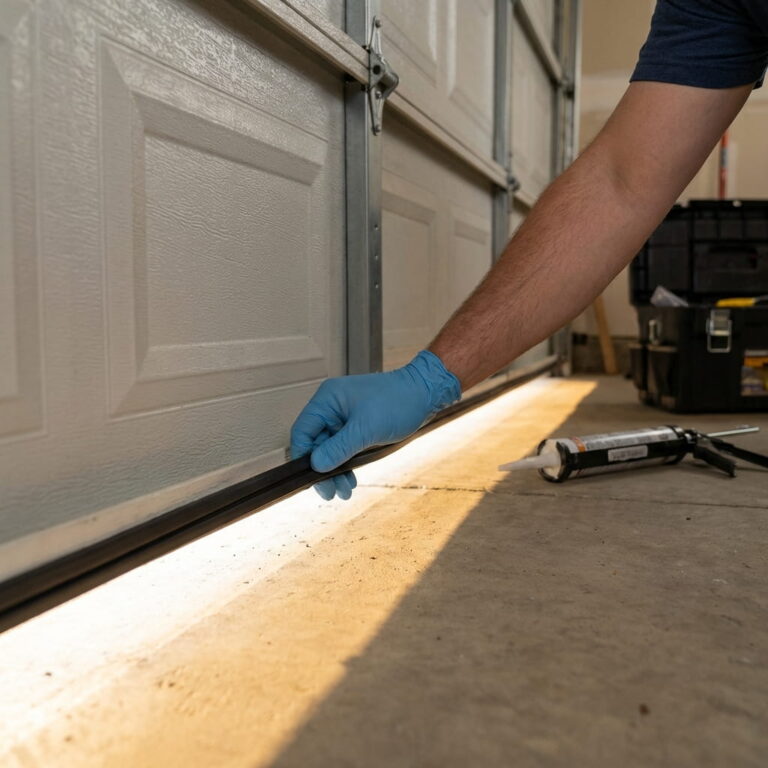
The primary culprit for a hot garage is usually the garage door itself. Most standard metal garage doors act as giant thermal conductors. They absorb the sun’s beating rays all day long and radiate that heat inward, effectively turning your garage into a heated box.
The Fix: Install a Radiant Barrier Traditional fiberglass insulation slows down heat transfer, but it creates a bulky mess and can trap moisture. A better solution for garage doors is a radiant barrier—a highly reflective foil insulation usually sandwiched around bubbles or foam.
Even with a radiant barrier, heat will naturally accumulate. Your car engine is hot when you park, and ambient heat creeps in. The problem is that in a sealed garage, this hot air has nowhere to go. Since hot air rises, it gets trapped at the ceiling, forming a layer of super-heated air that eventually pushes down toward the floor.
The Fix: Create a Convective Loop You need to give that hot air an exit strategy using passive ventilation — moving air without using electricity.
Many homeowners try to solve the ventilation problem by leaving their garage door cracked open about 6 inches. While this seems like a free solution, it is arguably the worst habit you can form for your home’s security and hygiene.
Why You Should Stop Doing This:
You don’t have to accept that your garage will always be an oven. By attacking the problem from three angles — blocking the heat at the door, venting the trapped air through the roof, and screening the opening for safe airflow — you can drop your garage temperature significantly.
Not only will your car and stored belongings thank you, but your home’s AC unit will finally catch a break.
Connect with highly-rated local professionals for rapid service that ensures your system's longevity. Receive complimentary price quotes from trusted garage door providers in your neighborhood. Connect with highly-rated local professionals for rapid service that ensures your system's longevity. Receive complimentary price quotes from trusted garage door providers in your neighborhood.